
What clinicians get out of EMDR software
EMDR is one of the most protocol-driven psychotherapies in practice. Generic EHRs and note-taking apps don't model the eight phases, can't run bilateral stimulation, and force therapists to context-switch mid-session. EMDR Assist is the opposite: every screen reflects where you are in the protocol and what the next step should be.
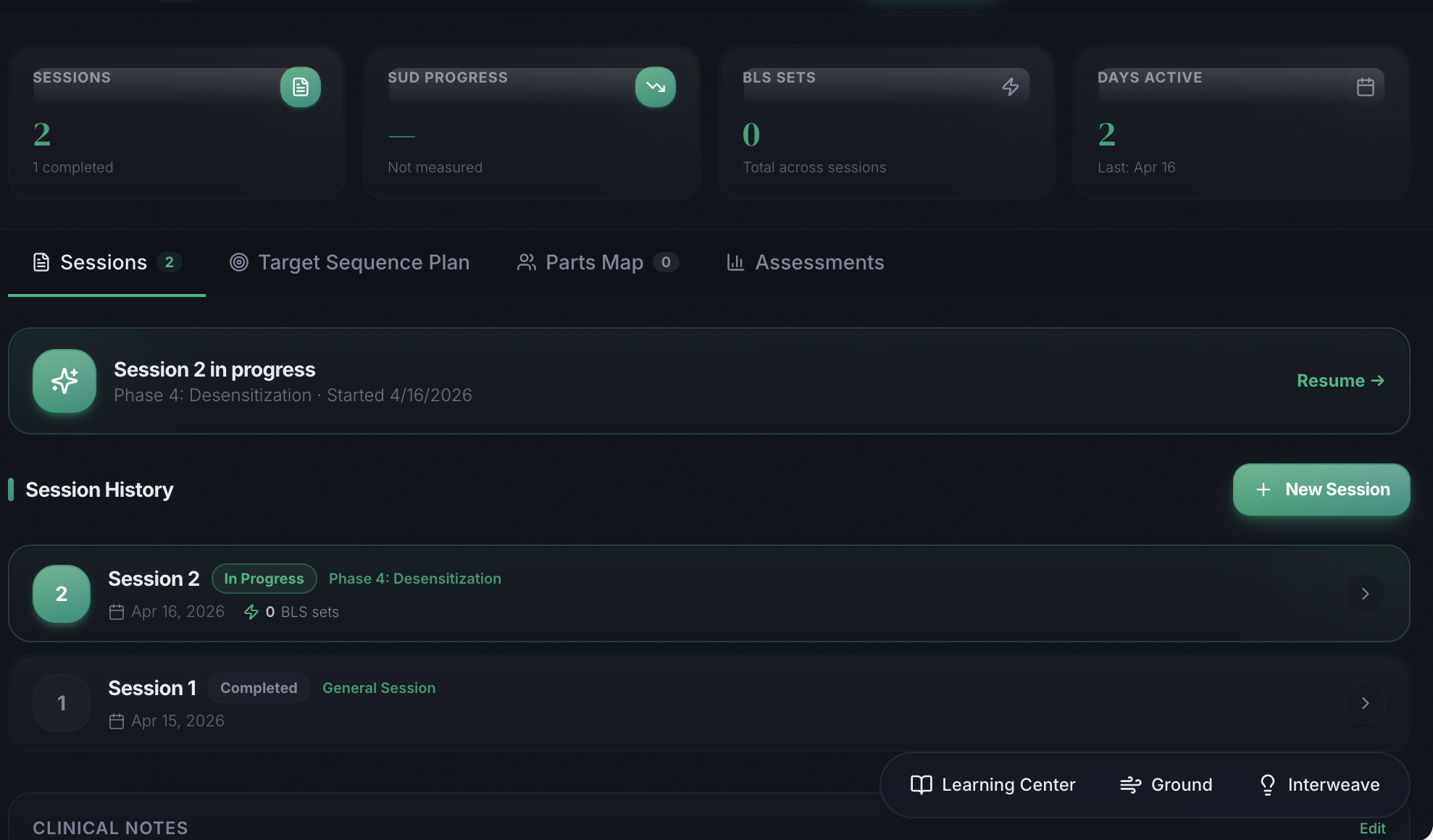
- Phase-aware workflow — the session view always shows which phase you're in, what's next, and the relevant script
- Integrated bilateral stimulation — visual, audio, and tactile-pacing BLS with a shareable client screen for telehealth
- SUD & VOC tracking — log scores inline; see them charted on a timeline at session close
- Cognitive interweave prompts — clinician-vetted, organized by stuck-point theme
- Auto-generated PDF reports — structured session data exports to a clean, redaction-aware PDF
- Target sequence plan editor — drag-and-drop past/present/future targets, link to processed sessions
- Consultation log — EMDRIA-aligned hour tracking for CIT and certification candidates
Why EMDR-specific software beats a general EHR
General EHRs are built around billing and SOAP notes. EMDR sessions don't fit that mold cleanly: phase 3 alone requires capturing target image, NC/PC, VOC, emotion, body location, and baseline SUD before processing begins. Doing this in a free-text note field is slow, error-prone, and erases the structure your supervisor or consultant wants to see.
EMDR Assist captures structured phase data the way the protocol actually defines it, then renders it into a clean PDF — so your notes are protocol-faithful and your documentation time drops.
Privacy and security
EMDR Assist follows a strict minimum-necessary model. Clients are referenced by a code only you would recognise — no names, initials, addresses, DOBs, or insurance information are required or stored. All data is encrypted at rest and in transit. See our security overview and security overview for details.
Frequently asked questions
Is EMDR Assist a replacement for my EHR?
No. EMDR Assist is a clinical session co-pilot that lives alongside your EHR. It handles the EMDR-specific workflow (phase guidance, BLS, SUD/VOC, target sequence) and exports a PDF you can attach to your EHR note.
Do I need to enter client PII?
No. EMDR Assist is designed so you can reference clients by a code only you would recognise. No names, initials, DOBs, or insurance fields are required.
Does it work for telehealth EMDR?
Yes. The BLS tool has a shareable client screen link — the client sees the bilateral stimulation full-screen on their device while you control speed and modality.
What does the free plan include?
Free includes the BLS tool, basic phase guides, and 3 learning module picks. Pro adds full session guides, all modules, and PDF reports. Clinical adds unlimited clients and consultation templates.
Is it secure for clinical use?
EMDR Assist is built with privacy-conscious architecture (encrypted storage, minimum-necessary data, audit logs). See /security for details.
Related tools for EMDR therapists
Try EMDR Assist with your next session
14-day free trial. No credit card. Built by clinicians, for clinicians.