

Quick answer
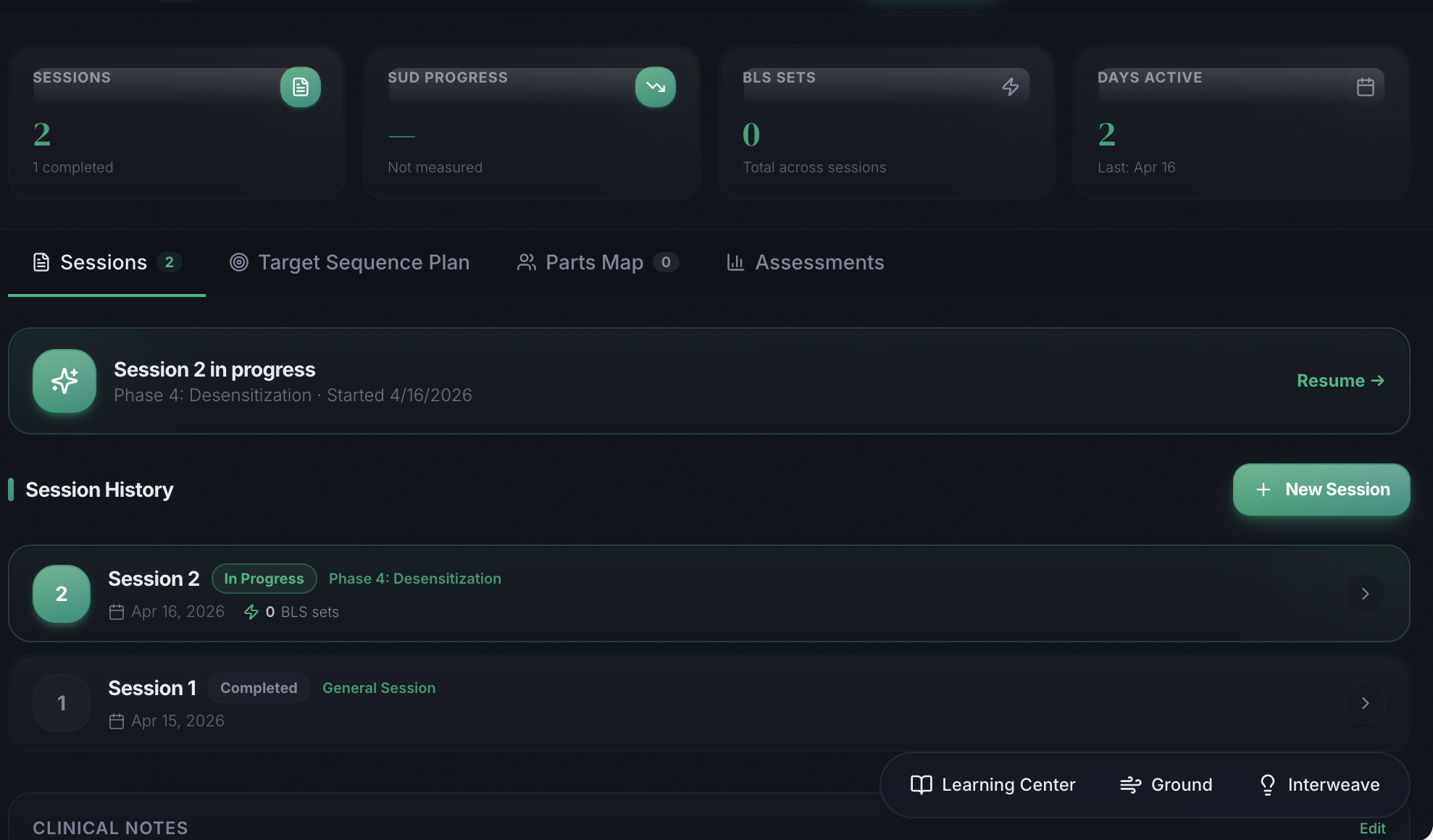
WeMind is a polished all-in-one with AI notetaking, built-in video, and BLS — a strong fit if you want one platform to run the whole session. EMDR Assist is the better fit if you want deeper 8-phase clinical scaffolding (target sequence planner, interweave library, EMDRIA-aligned consultation tracking) on top of your existing telehealth and EHR.
EMDR Assist vs WeMind — feature comparison
| Feature | EMDR Assist | WeMind |
|---|---|---|
| Free plan | ||
| Starting paid price | $19 / mo | $14.95 / mo (Lite) |
| No client PHI required | ||
| Visual / audio / tactile BLS | ||
| 8-phase guided workflow | ||
| Structured SUD & VOC capture | ||
| Target sequence planner | ||
| Cognitive interweave library | ||
| AI session notes | ||
| Built-in video calling | ||
| Case conceptualization tools | ||
| Consultation hour tracking | ||
| Client-shared remote BLS | ||
| BAA available |
Where EMDR Assist beats WeMind
- Deeper 8-phase scaffolding. Phase-by-phase guides with structured Phase 3 assessment, desensitization loop, installation, body scan, and reevaluation prompts.
- Cognitive interweave library. Organized by stuck-point theme (responsibility, safety, choice) and surfaced during processing.
- Target sequence planner. Float-back / affect bridge worksheets and a structured plan you can export.
- EMDRIA-aligned consultation tracking. Hour logs designed for CITs and consultants — not something WeMind advertises.
- EMDR Guides library. Free clinical guides, scripts, and downloadable PDFs for ongoing learning.
Where WeMind wins
- Built-in video calling. WeMind bundles its own videocall so you don't need Zoom/Doxy. EMDR Assist runs on top of whatever telehealth tool you already use.
- All-in-one feel. Notetaking, video, and BLS in one window — appealing if you want a single login for the whole session.
- European footprint. WeMind highlights coverage by health insurers and government approvals in several European markets, which matters for EU practices.
Switching from WeMind to EMDR Assist
- Create a free EMDR Assist account.
- Re-enter your active EMDR clients by a code — no PHI migration needed.
- Keep your existing telehealth (Zoom, Doxy, etc.) and EHR; use EMDR Assist for the EMDR workflow itself.
- Export any historical PDFs from WeMind into your record-keeping system before cancelling.
Most clinicians move over within a single session cycle. EMDR Assist intentionally doesn't try to be your EHR or your videocall — it focuses on the EMDR session.
Frequently asked questions
Is EMDR Assist cheaper than WeMind?
They're in the same range. EMDR Assist has a free forever plan and a Pro tier starting at $19/mo. WeMind also has a free plan; their paid Lite tier starts at $14.95/mo and Essential at $35.95/mo.
Does WeMind require client PHI?
Per WeMind's FAQ, their application does not process client PHI and is GDPR-compliant. EMDR Assist takes the same approach — reference clients by a code, never names or initials, no PHI required.
Does EMDR Assist include built-in video calling?
No. WeMind bundles its own videocall; EMDR Assist runs alongside whatever telehealth tool you already use (Zoom, Doxy, SimplePractice video, etc.). This keeps it cheaper and avoids forcing a videocall change.
Can I keep my existing EHR and use EMDR Assist?
Yes — that's the recommended setup. EMDR Assist handles the EMDR session workflow; your EHR continues to handle billing, intake, and the formal medical record.
Is EMDR Assist secure for clinical use?
EMDR Assist is built with privacy-conscious architecture. Because no client PHI is required, many therapists use EMDR Assist without storing any PHI at all.
Related tools for EMDR therapists
Try EMDR Assist with your next session
14-day free trial. No credit card. Built by clinicians, for clinicians.